Skip to content
LasX — The Laser Experts
Contact us

Equipment

One control architecture, a machine for every line

Every LasX machine is built around a LaserSharp® processing module — chosen for the material and the process: CO₂, NIR, green, or UV, at the power and pulse duration the job needs. What stays the same across all of them is the module’s core controls and software architecture. What changes between platforms is the material handling, the motion system, and the automation around it — which is why a module can also be integrated into a line we did not build. See the technology inside.

Slitter laser · Premium

FocusPro

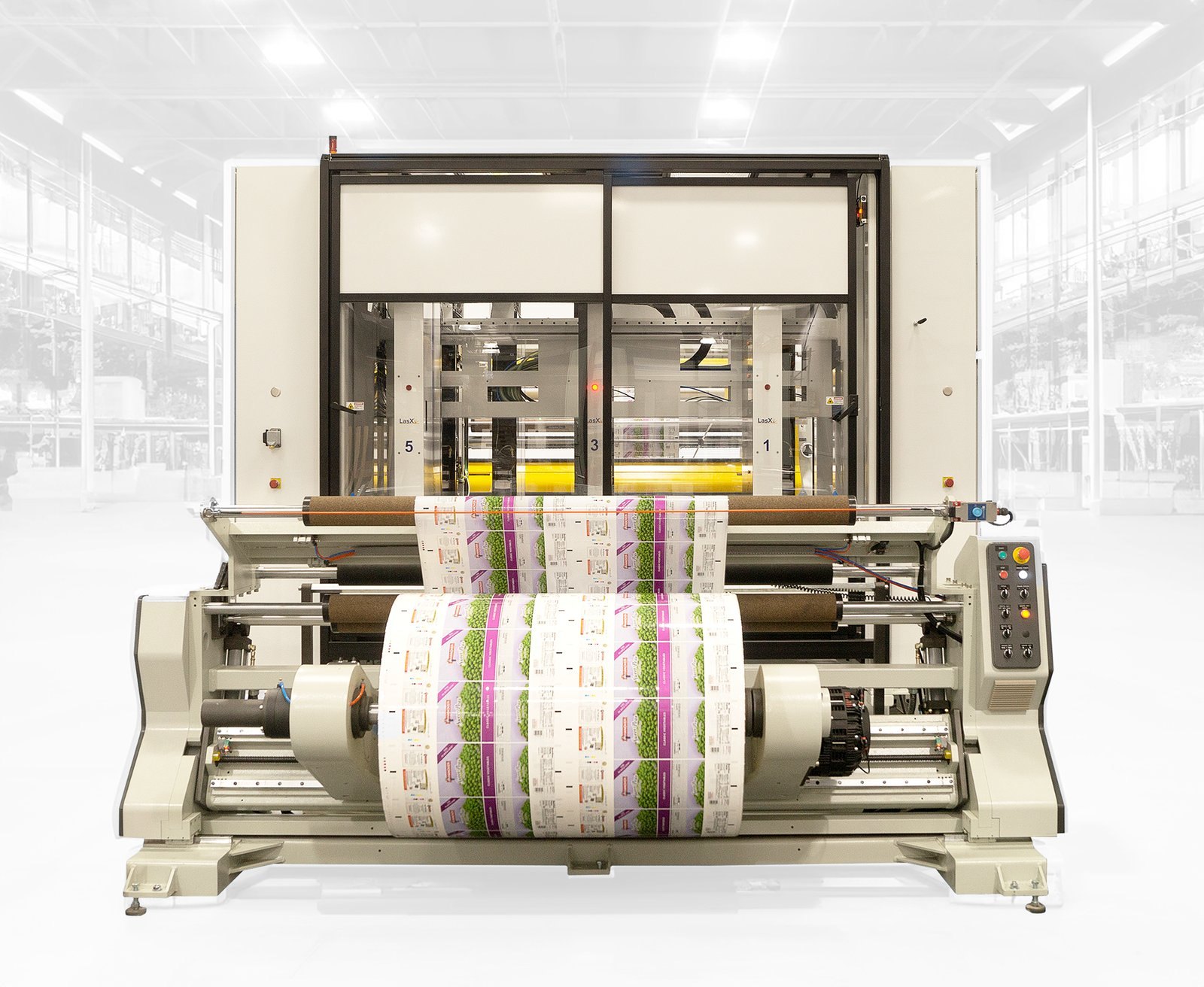
FocusPro roll-to-roll laser converting machine running a printed flexible packaging web through a five-module laser bank

FocusPro is the top of the LasX packaging range — a configure-to-order laser converting machine for flexible packaging converters and OEM lines, on webs from a 600 mm mid-web to 1,800 mm. It runs inline at web speeds up to 500 m/min in select applications, with up to eight independently controlled LaserSharp® processing modules, replacing mechanical tooling for easy-open features, breathable perforation, registered scoring, and contour cutting.

Specifications
Precision micromachining

ExactPro

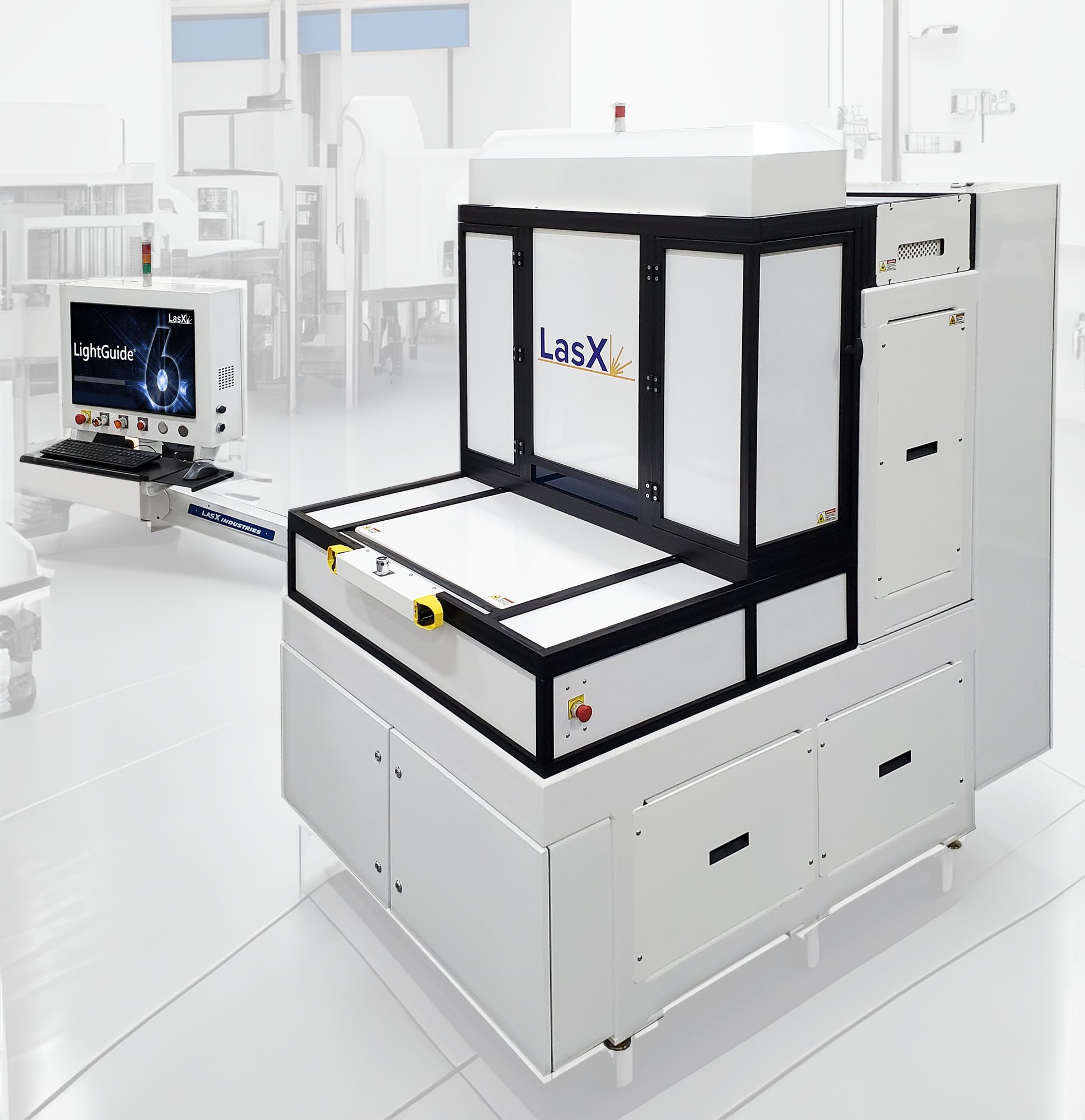
ExactPro laser micromachining workstation with its LightGuide® operator console

ExactPro is a laser micromachining workstation with a square bed — 310 × 310 mm or 670 × 670 mm — and the part carried under a LaserSharp® LPM on a dual-linear-motor XY stage. It registers each part, compensates for distortion, and calibrates its own scan field. Cleanroom configuration is standard.

Specifications
Precision narrow-web converting

MicroLam

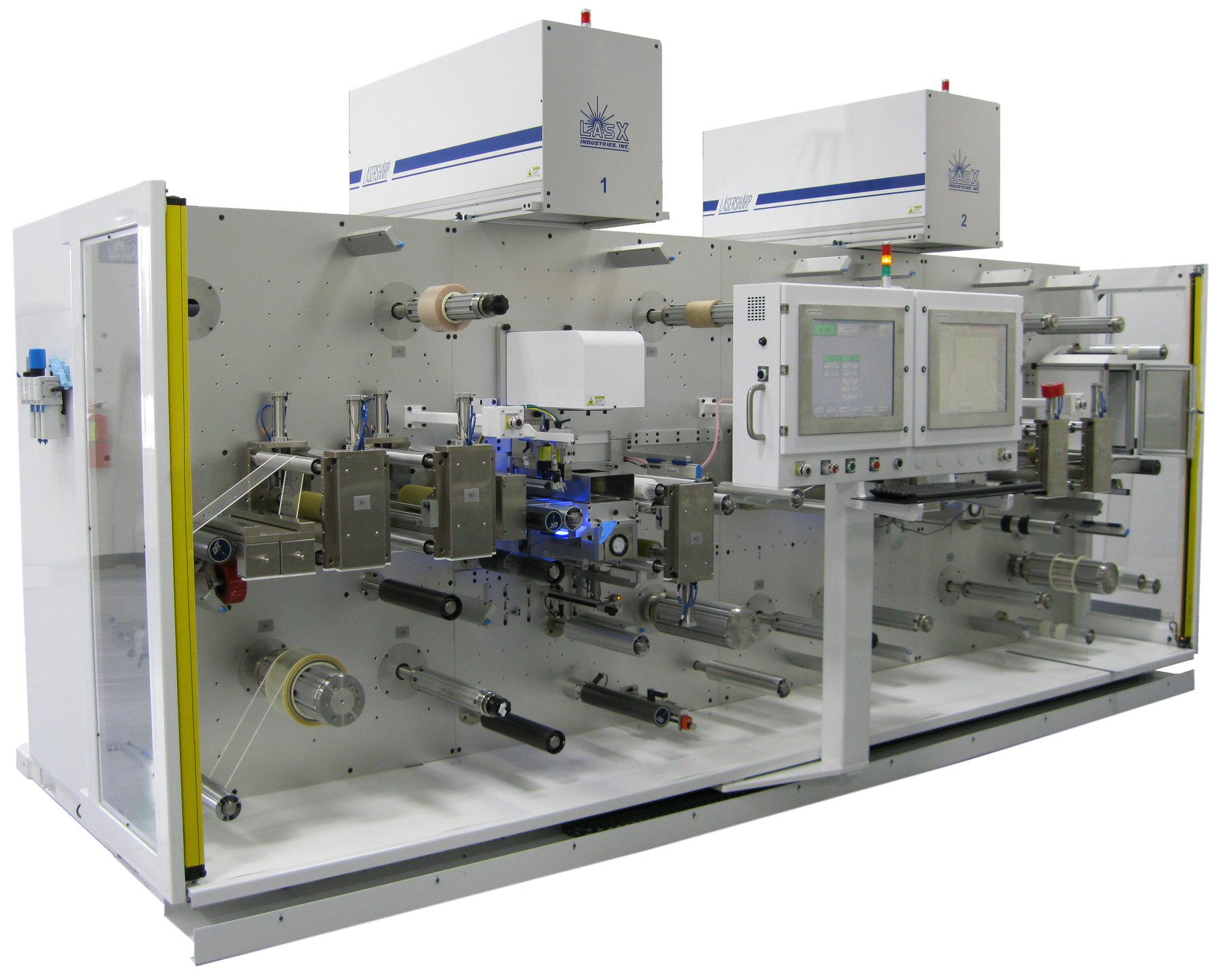
LasX MicroLam narrow-web roll-to-roll converting machine with two LaserSharp® processing modules, operator HMI, and light-curtain guarding

MicroLam is a narrow-web roll-to-roll converting platform built around LaserSharp® LPMs. The web path is configured to the application — unwind and rewind spindles, nip stations, and one to three LaserSharp® LPMs are specified per machine — on a 100 mm or 350 mm web. A precision lamination station is an option for multilayer laminates. Web handling is cantilevered and rolls are loaded by hand, which keeps the machine compact and sets its limit at narrow web.

Specifications
Laser workstation

ExactCore

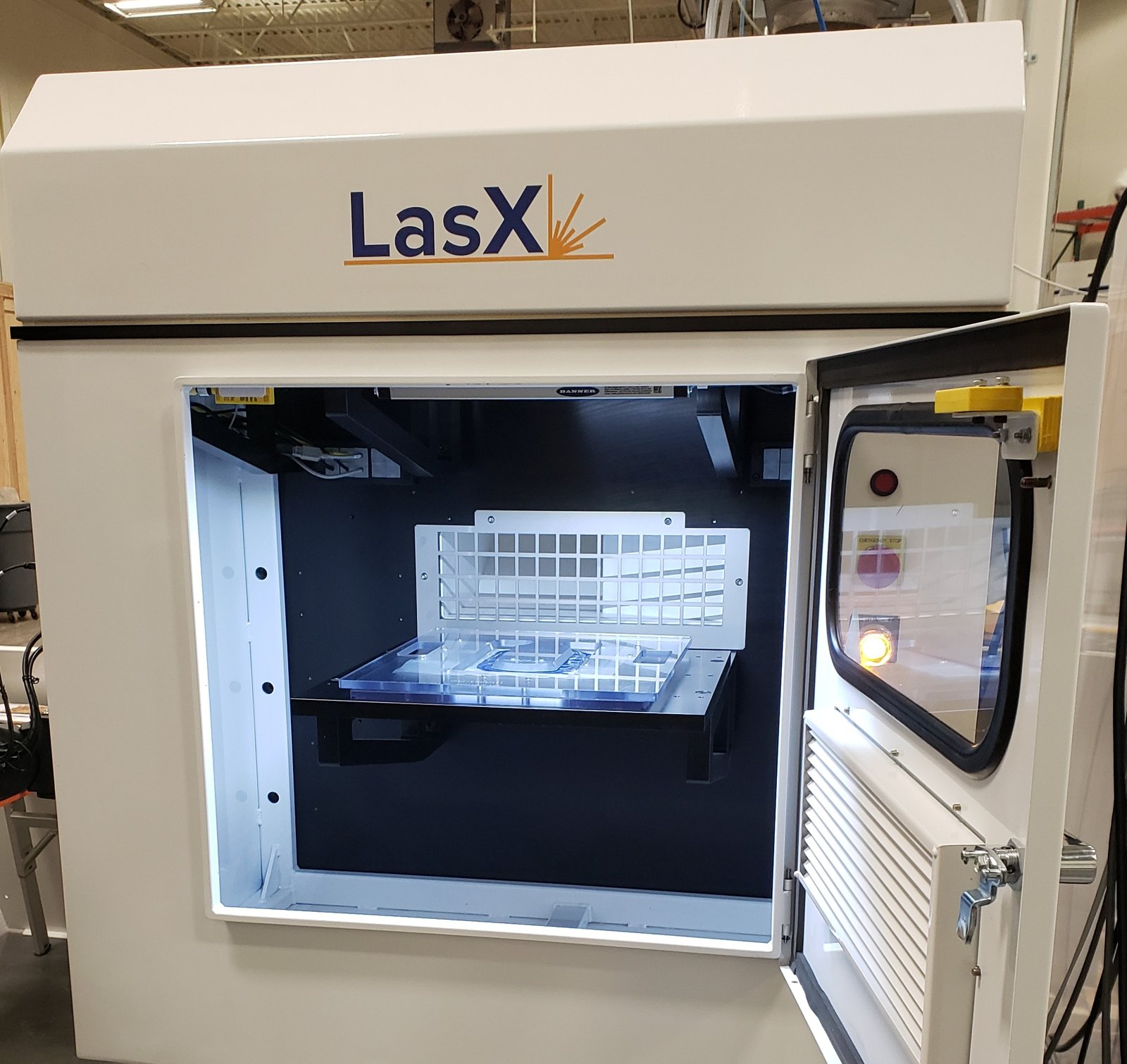
ExactCore laser workstation with its enclosure door open on the fixed bed

ExactCore is the LasX machine you start on. The part sits on a fixed bed and a scanner moves the beam, so there is no XY stage to wear, align, or wait for. Any LasX laser source fits the same frame — CO₂ for films, papers, and plastics; nanosecond to femtosecond sources for medical polymers, metals, and glass — and the job you design in LightGuide runs the same way on ExactPro and SheetPro when the work outgrows the bench.

Specifications
Direct-to-package marking · Rigid packs

MarkLine

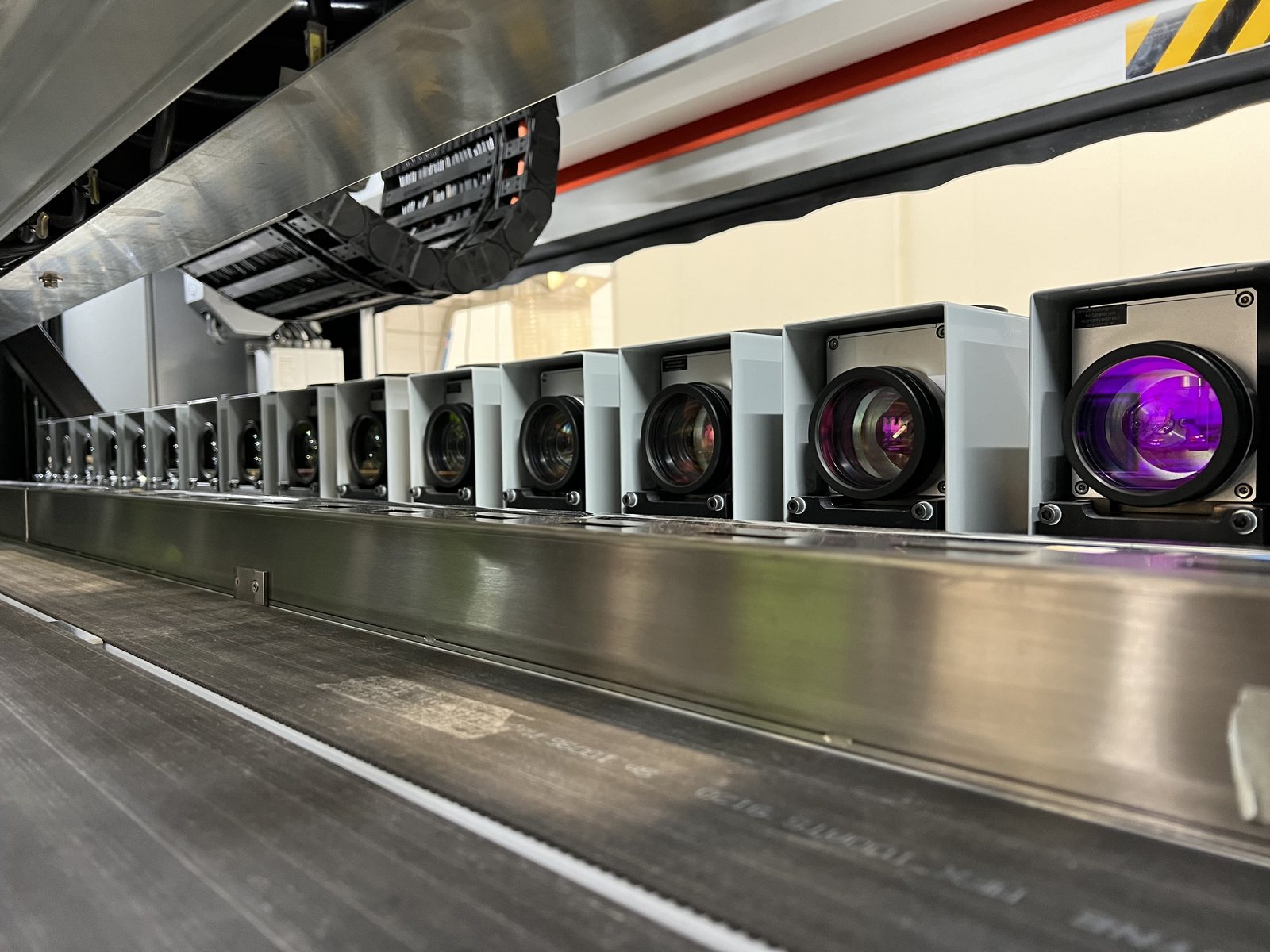
A bank of LaserSharp Marking scan heads in a row along the marking line, lenses toward the product path

MarkLine™ is the LasX machine for direct-to-package marking on bottles, caps and other rigid packs — no ink, no label, no consumable in the marking step. Packs convey past a bank of LaserSharp® modules, single-sided or in 360° rotation, so date and lot codes, serialized or covert security marks, embellishment and full label-replacement graphics become part of the package rather than something applied to it.

Specifications
Roll- or sheet-to-part laser finishing

SmartFinish

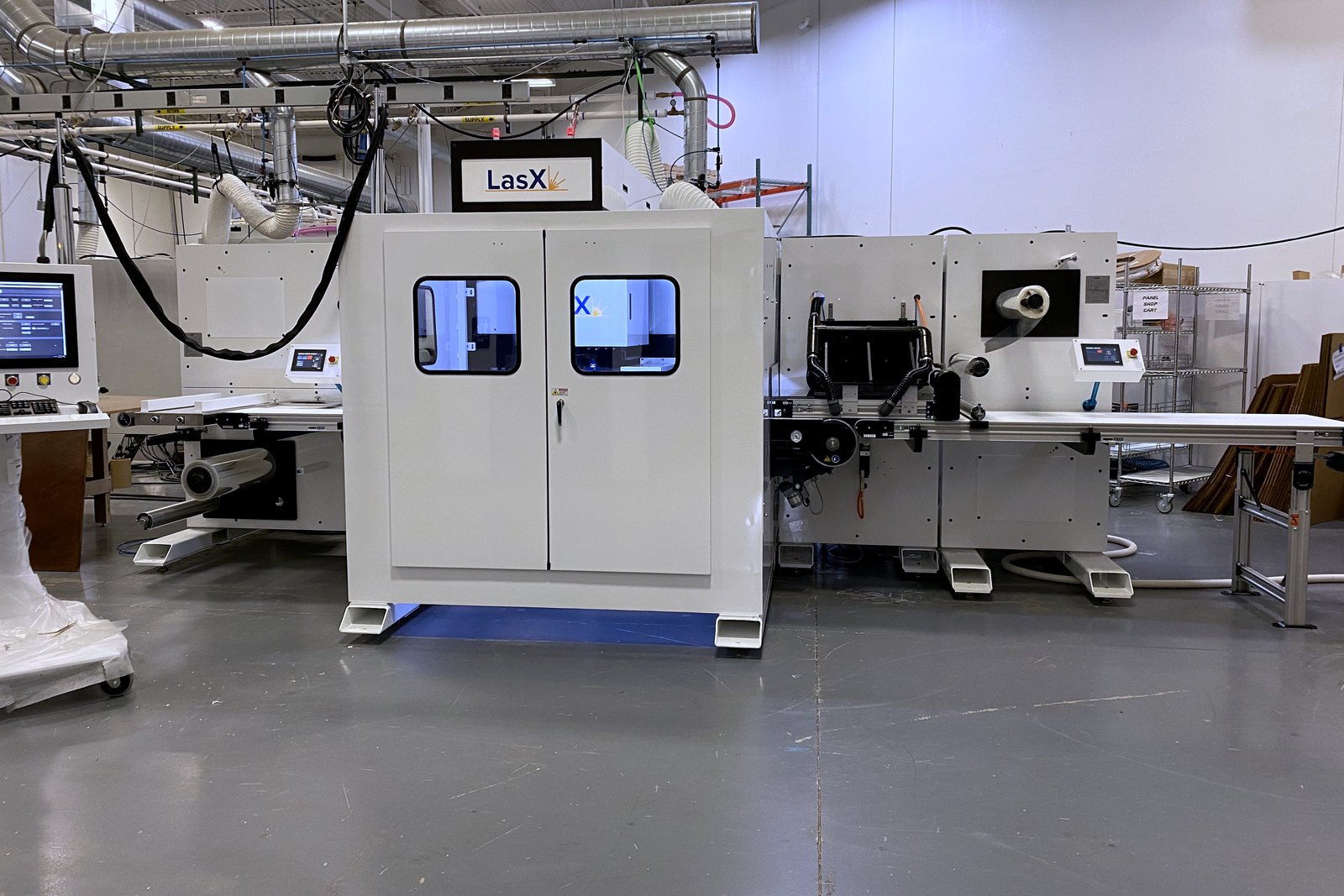
SmartFinish™ roll-fed laser finishing machine on the LasX floor — unwind, enclosed laser cell, and part take-off conveyor

SmartFinish is a configure-to-order laser finishing machine that turns roll or sheet material into finished parts — flexible electronics, security products, medical components, aerospace components, folding cartons, and commercial print. Its patented vacuum process conveyor holds the material flat and in register through cutting, kiss-cutting, scoring, and separation, so high-precision parts are manufactured continuously rather than one sheet at a time. Robotics and automation sort, stack, and pack the finished parts.

Specifications
Wide-web metal foil · Roll-to-roll

FoilPro

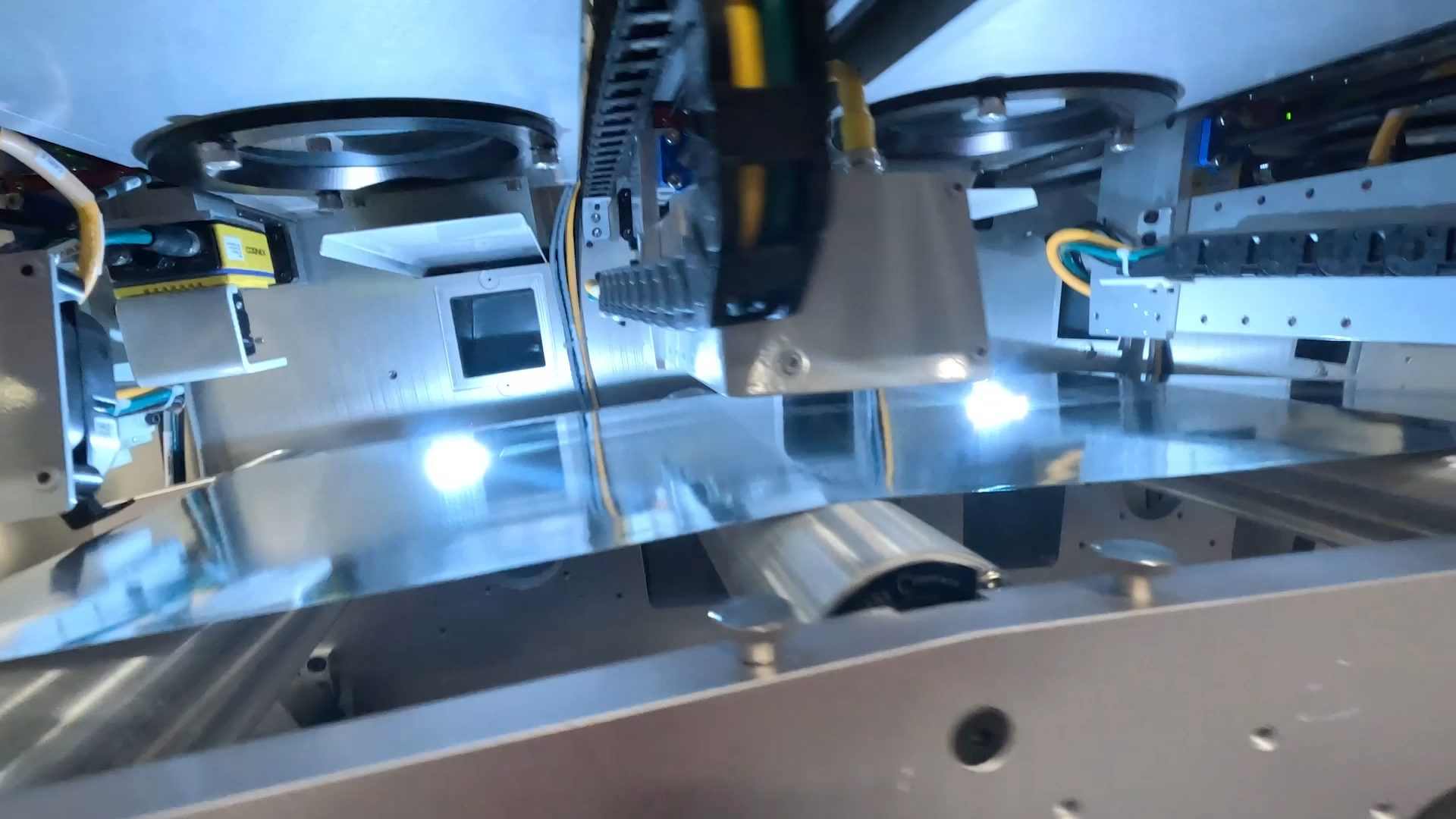
LaserSharp processing modules and vision sensor over a bright metal foil web inside a roll-to-roll converting machine

FoilPro is the metal-foil configuration of the LasX wide-web platform. It shares the frame, the LaserSharp® modules and the LightGuide® control used across the packaging range, and changes what a metal web actually requires — tension control matched to thin foil, unwind and rewind with splice handling, and debris and fume extraction sized for metal processing. Laser sources are NIR and green, nanosecond through femtosecond, selected for the foil and its coating rather than fixed by the machine.

Specifications
Large-format sheet processing

SheetPro

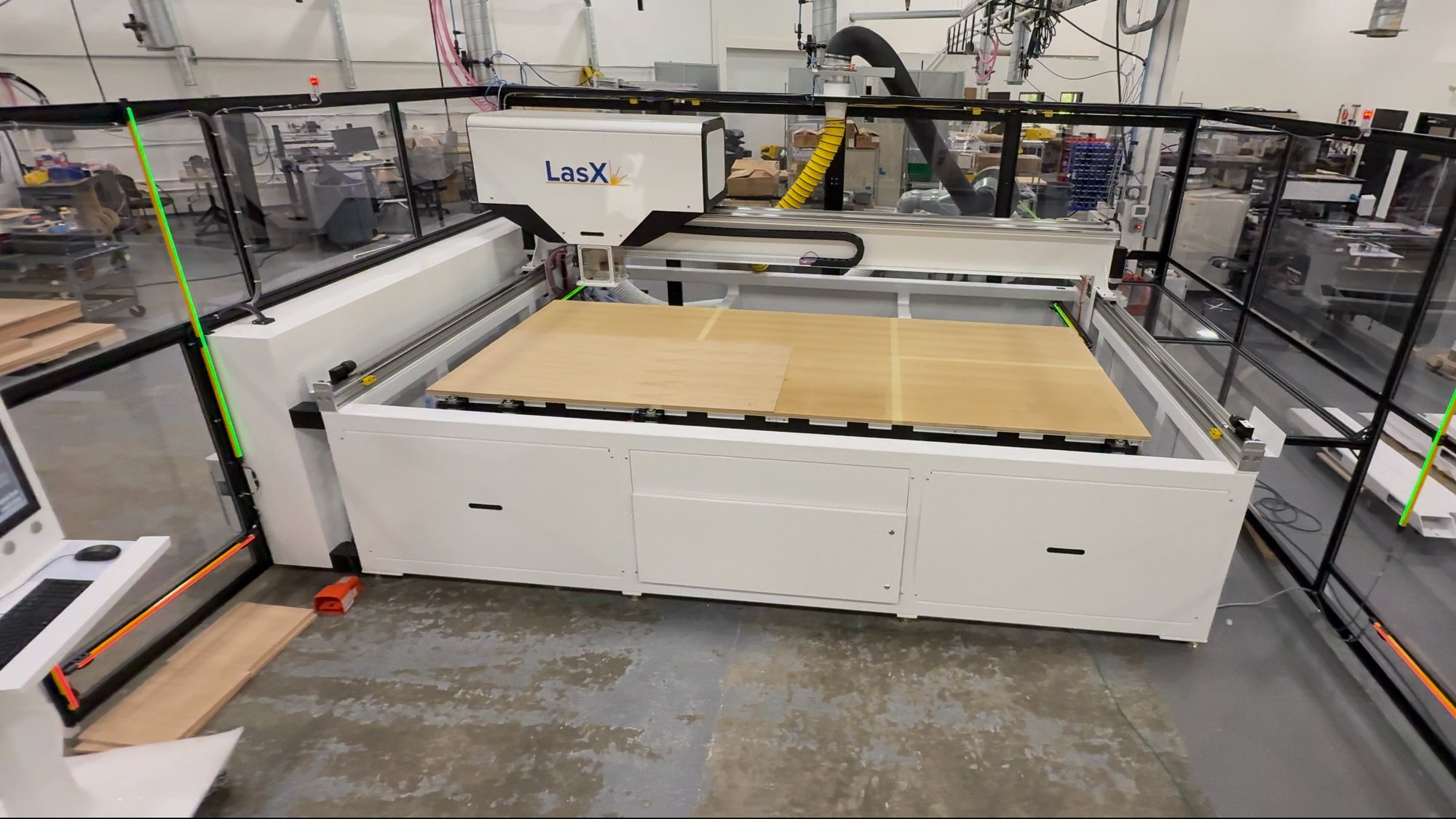
SheetPro laser workstation with a 5 × 12 ft static bed and overhead XY gantry

SheetPro is a large-format laser workstation for sheets, boards, and plates. The bed stays still and a LaserSharp® LPM travels above it on an XY gantry. Standard beds are 800 × 1,000 mm, 4 × 8 ft, and 5 × 12 ft.

Specifications
Easy-open module · Mounts on your pouch line

Scoreline

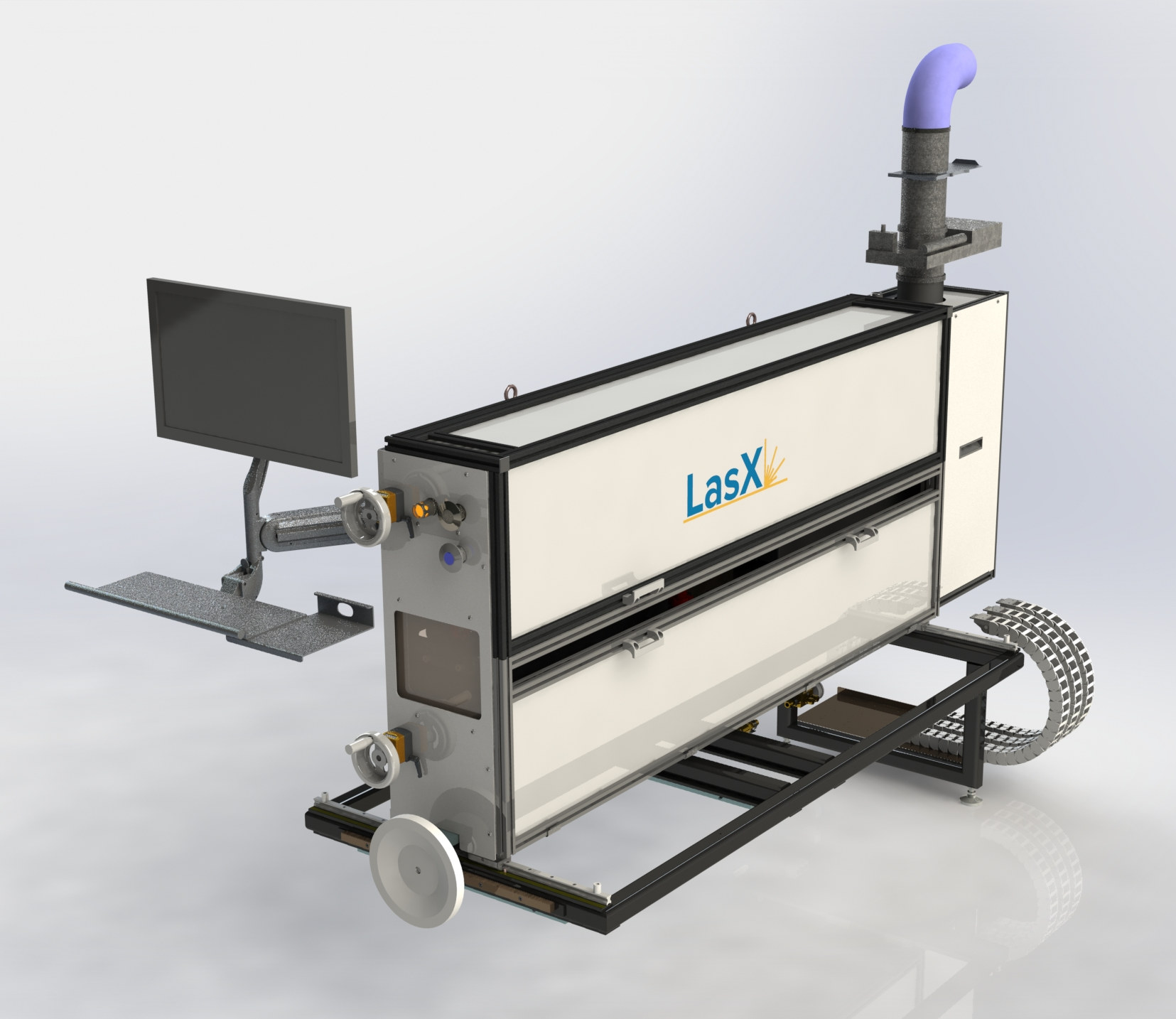
Scoreline CAD render — the enclosed easy-open scoring module on its carriage frame, with operator display, fume extraction duct and web rollers

Scoreline is the LasX easy-open module for bag and pouch production. It mounts on the pouch-making machine you already run and scores both faces of the folded web in one pass — registered laser scores and tear features at line speed, so the finished pouch opens where the design says it should — without mechanical scoring tools, and without replacing the line.

Specifications
The module family inside every LasX machine

LaserSharp® LPM

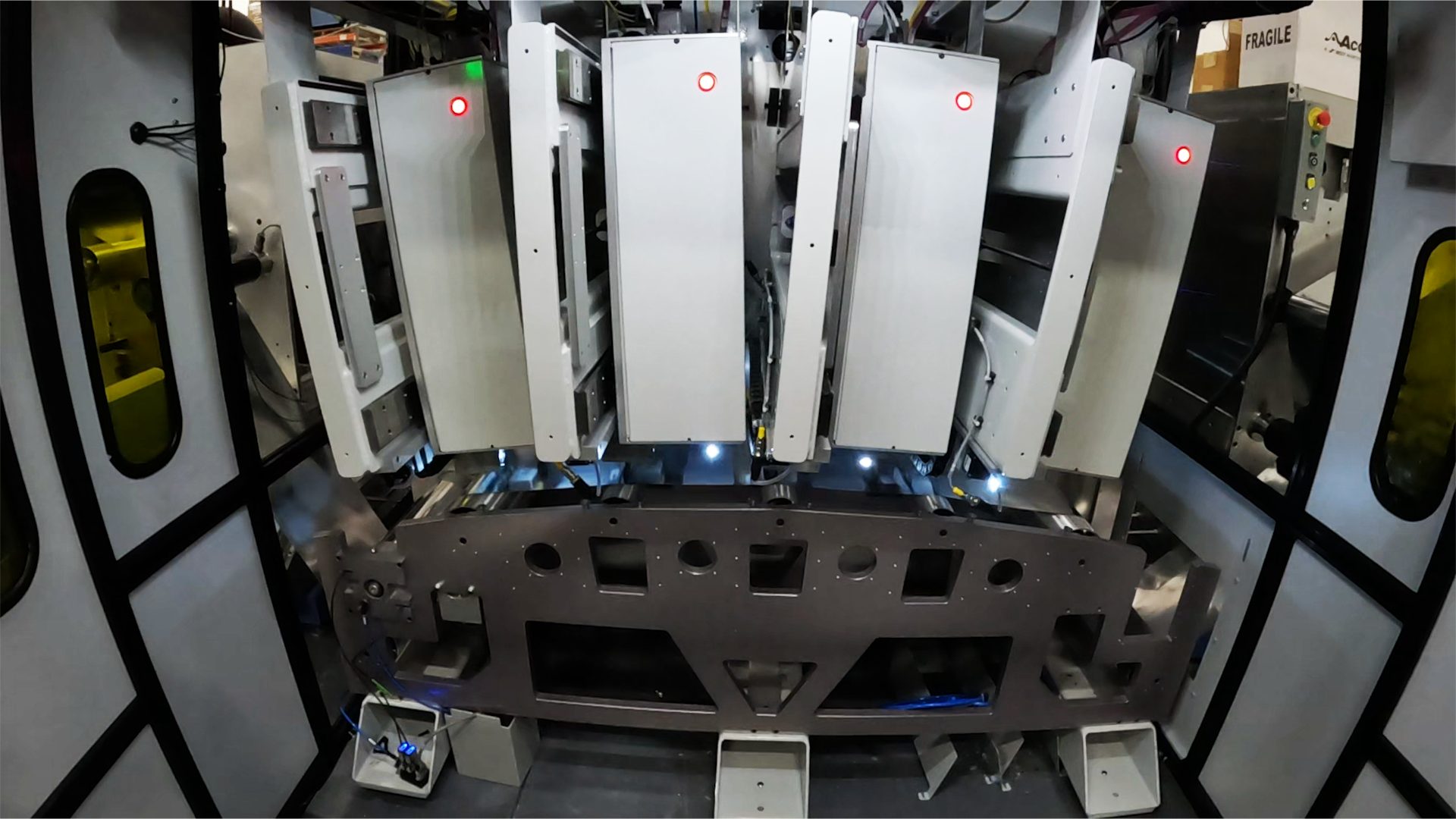
Bank of four LaserSharp processing modules in a roll-to-roll foil ablation system

LaserSharp® Processing Modules are the laser engines at the core of every LasX machine. The laser source is matched to the material and the process — CO₂, NIR, green, or UV, at the pulse duration the process needs — while the core controls and software architecture stay the same across the family. Modules are also sold and integrated on their own, so converters can add laser capability to an existing press, laminator, or slitter-rewinder rather than replacing the line.

Specifications
Custom equipment

When no standard platform fits the format, the material, or the line, we engineer one.

How custom equipment works

Questions buyers ask

Flexible packaging — FocusPro™ and the Scoreline™ module

How much does a laser converting machine cost?

It depends on four things, in roughly this order: web width, the number of LaserSharp® modules (which sets how many features can be produced at once and therefore line speed), the laser power and wavelength the material needs, and the automation around the process — unwind and rewind, registration, inline verification. That is why the packaging machines are positioned by what you run, not by a list price: FocusPro on a 600 mm mid-web or a 1,000, 1,400, or 1,800 mm web, from down-web scoring to perforation, shaped features, contour cutting, drop removal, and the full option set. Where the requirement is easy-open scoring alone, on a pouch line you already run, Scoreline is a module that mounts on that machine rather than replacing it, to 840 mm. What the price is made of is the module count and the power your material actually needs, and a trial in the PhotonX lab is how those are established — so a quote is firmest after one. A buyer who already knows the configuration can ask for a quote directly. Where the volume does not yet justify the capital, contract manufacturing on the same equipment is the alternative.

Which machine do I need?

Start from the feature and the web. Converting on a 600 mm mid-web or a 1,000, 1,400, or 1,800 mm web — scoring, perforation, cross-web or shaped features, contour cutting, drop removal, and the full option set — is FocusPro. Webs to 350 mm run on MicroLam. If what you need is easy-open scoring on a pouch-making machine you already own, Scoreline mounts on that line instead — one or two scoring modules on a carriage, not a machine. All of them run the same LightGuide® software and share the same core control architecture, so recipes and operator knowledge carry across.

Can a LaserSharp® module be added to a press or line we already own?

Yes. The LaserSharp® module is sold to OEMs and integrated into existing presses, laminators, and slitter-rewinders. What LasX needs to know is the web path, the available space, the line's encoder and registration signals, and the material — the integration is engineered around those.

SmartFinish™ — roll- or sheet-to-part laser finishing

What does SmartFinish make, and what does it replace?

Finished parts from roll or sheet — flexible electronics, security products, medical and aerospace components, folding cartons, commercial print — manufactured continuously on a patented vacuum process conveyor that holds the material flat and in register. It replaces the cutting die and everything that comes with it: tooling cost, die lead time, and the setup between jobs. A changeover is a file load.

Sheet or roll — which input does it take?

One or the other, chosen per machine — sheet and roll infeed on one SmartFinish is custom equipment. The rest is configured to order: a 500 mm or 600 mm process width, one or two LaserSharp® LPMs at the laser power the job needs, and one of three part-handling packages — Essential (part separation and manual takeoff), Sort (adds robotic sorting), or Finish-to-ship (adds robotic stacking and packing). Print and feature registration are both standard. The output is finished parts ready to ship, not a sheet that still needs stripping.

Where does laser finishing win, and where does a die still make sense?

Laser finishing wins on short runs, frequent changeovers, versioned or personalized work, and any job where die lead time is the schedule. Long runs of one stable design are where a die still earns its keep. If your mix is moving toward shorter runs, the calculator on /resources/roi-calculator puts numbers on the crossover.

FoilPro™ — metal foil, roll-to-roll

What is FoilPro™ for?

Metal foil on a web — bare copper and aluminum, coated electrode foil, shim stock, and metallized carriers — cut, perforated, and selectively ablated roll-to-roll on a 600, 1,000, 1,400, or 1,800 mm web. It shares the frame, the LaserSharp® modules and the LightGuide® control with FocusPro™, and changes what a metal web needs: tension control matched to thin foil, unwind and rewind with splice handling, and debris and fume extraction sized for metal processing.

Why not just run foil on a FocusPro™?

Because the web is the hard part, not the laser. Foil is unforgiving of tension error, it arrives on rolls that have to be spliced, and cutting metal produces debris and fume that film does not. The laser source also changes — NIR and green rather than CO₂, nanosecond through femtosecond, chosen for the foil and its coating.

What edge quality can we expect on coated electrode foil?

That is trial data, not a machine specification. Burr height, heat-affected zone, kerf width, and edge oxidation belong to the material and the parameter set rather than to the frame, and are measured per foil thickness and coating in the PhotonX lab and reported back. A nitrogen or argon assist-gas shroud is a configure-to-order option where an oxide-free edge is specified.

ExactPro™ — precision micromachining

What is ExactPro for?

Precision micromachining on a square bed, 310 × 310 mm or 670 × 670 mm — wafers to 300 mm, panel-level packages, glass interposer, and diagnostics and medical device work. The part rides under the beam on a dual-linear-motor XY stage, with 10 µm positional repeatability. Feature size is set by the laser module and established in the trial. Sheets, boards, and plates larger than 670 × 670 mm run on SheetPro.

Which laser sources can it carry?

NIR (1030–1064 nm), green, UV, and CO₂ LaserSharp® modules, with pulse durations from nanosecond to femtosecond on the solid-state sources — wavelength and pulse duration are chosen independently per application. A femtosecond module is the configure-to-order choice for through-glass vias and glass interposer work.

How does it hold registration on printed or laminated sheets?

Automated registration reads features on each part, maps the actual geometry against the nominal file, and corrects the toolpath for distortion — which matters most on laminated or humidity-sensitive stock. Vision registration, self-calibration, and the cleanroom configuration are all standard; full automatic load and unload is an option.

ExactCore™ — scanner-based laser workstation

How is ExactCore different from ExactPro?

ExactCore moves the beam over a fixed bed; ExactPro moves the part under the beam on an XY stage. That makes ExactCore simpler and faster within its field, with fewer parts to wear or align. ExactPro is for parts that need 10 µm repeatability across the full bed, and for work that combines stage motion with the scanner.

What can I run on it?

Whatever the source cuts. CO₂ handles films, papers, plastics, and flexible materials. Nanosecond through femtosecond sources handle medical polymers, thin metals, glass, and ceramics. Feature size is set by the laser module, not the platform — prove it on your material in PhotonX first. If you buy one after a trial, the results in your report become its acceptance criteria.

What happens when the work outgrows it?

The job moves with you. LightGuide runs every LasX machine, so a job designed on ExactCore runs on ExactPro or SheetPro. Talk to the same team, keep the same software, and add the stage, the bed size, or the automation the work now needs.

SheetPro™ — large-format sheet processing

What is SheetPro for?

Sheets, boards, and plates too large for a square precision bed — electronics, medical sheets and panels, aerospace and defense, battery and energy, gaskets and adhesives. The bed stays still and a LaserSharp® LPM travels overhead on an XY gantry, on a standard 800 × 1,000 mm, 4 × 8 ft, or 5 × 12 ft bed. Larger beds, odd aspect ratios, more than one LPM, and full automation are quoted as custom equipment.

Can SheetPro run femtosecond work?

Yes, with a femtosecond LaserSharp® LPM configured to order. Femtosecond sources bring low average power and a small scan field, so field size and throughput for femtosecond work are established on your material in the trial rather than promised across the full bed.

MicroLam™ — precision narrow-web converting

When is a narrow-web platform the right choice over a wide-web machine?

When the product is a narrow roll — labels, medical laminates, adhesive components, flexible circuits — and the value is in precise features on a compact, often expensive web rather than throughput across a wide one. MicroLam comes in 100 mm and 350 mm web widths, with cantilever web handling and hand-loaded rolls — which keeps the footprint small, and is why it stops at narrow web: a 600 mm mid-web line runs on FocusPro.

How much of the machine is configurable?

The web path itself. Unwind and rewind spindle count, nip stations, and one to three LaserSharp® LPMs and their laser sources are specified per application, with a precision lamination station as an option for multilayer laminates. Control is the same Proton λ and LightGuide® architecture as every other LasX machine.

MarkLine™ — direct-to-package marking on rigid packs

What does laser marking replace on a package?

Ink, ribbon, or label in the marking step, and their changeovers. Nothing is added to the package, so the mark is compatible with recyclable mono-material structures. Content is fully variable at unit level — date and lot codes, serialization, covert security marks, and full label graphics.

How does it scale to line speed?

By module count. Objects are conveyed past one or more LaserSharp® modules, single-sided or in 360° rotation; the bank is sized to line rate and mark area, from a single module to sixteen — the largest configuration in production. The laser source is matched to the substrate (UV, green, NIR, or CO₂), and µVerify™ inline inspection is an option.

Is it proven in production?

Yes. LasX and Procter & Gamble launched LaserSharp® Marking on Tide® Ultra OXI Boost, named Best in Class at the 2026 PAC Global Awards. Durability is verified on your package and artwork before a machine is quoted.

LaserSharp® LPM — the module for OEMs and existing lines

Can a LaserSharp® module be integrated into a line LasX did not build?

Yes — this is a core part of the business. LasX supplies LPMs as OEM modules with mechanical and electrical integration envelopes and control-handshake documentation, for presses, laminators, and slitter-rewinders. What LasX needs to know is the web path, the available space, the line's encoder and registration signals, and the material.

Which wavelength is right for our material?

It depends on absorption. CO₂ at 9.4 µm behaves very differently from 10.6 µm on some polymers and adhesives — a difference that shows up as edge quality and achievable speed — and NIR, green, and UV sources — at nanosecond down to femtosecond pulses — cover what CO₂ cannot. The PhotonX lab establishes this on your material rather than guessing from a spec sheet.