
Capability
Laser Micromachining
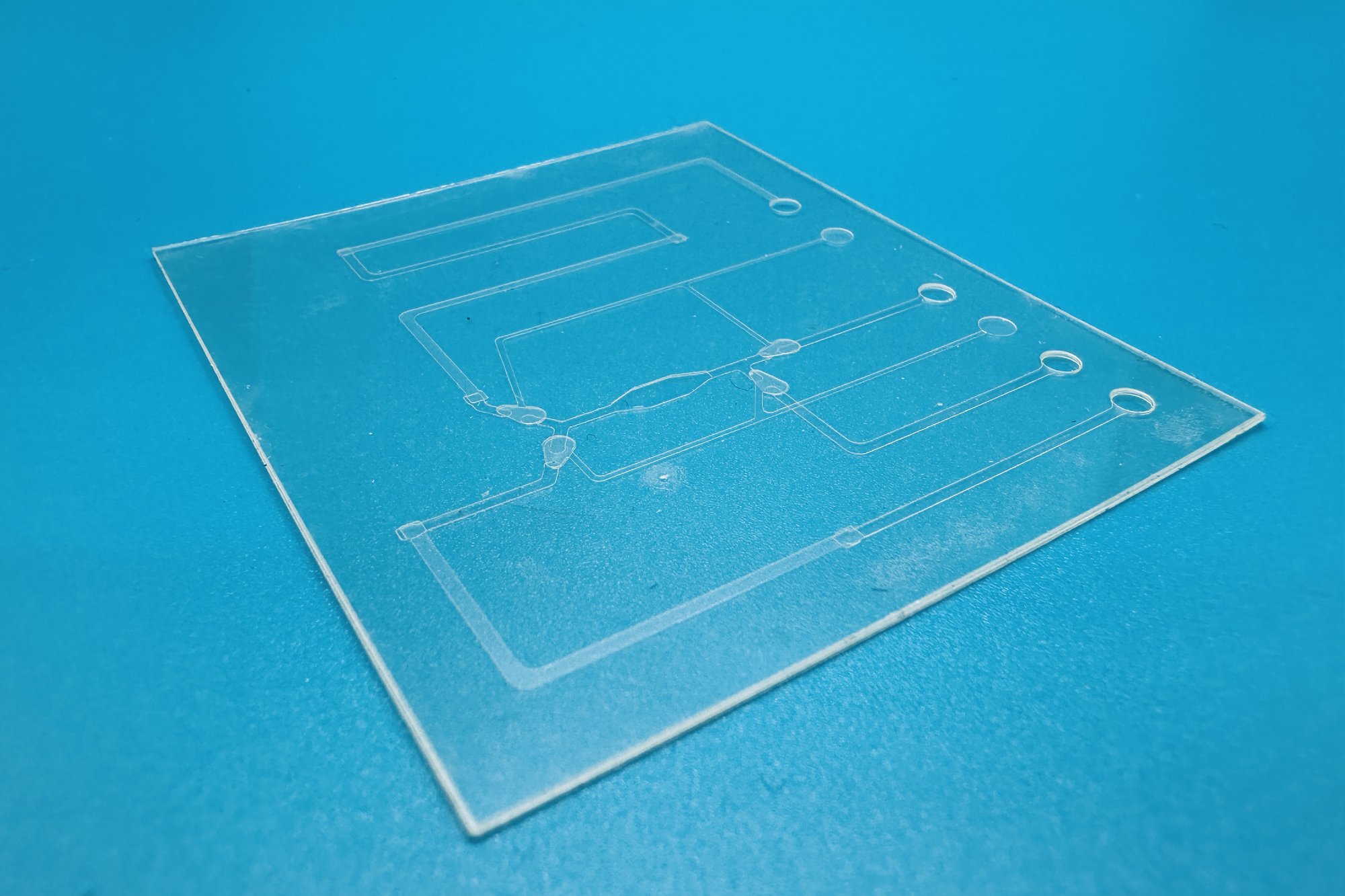
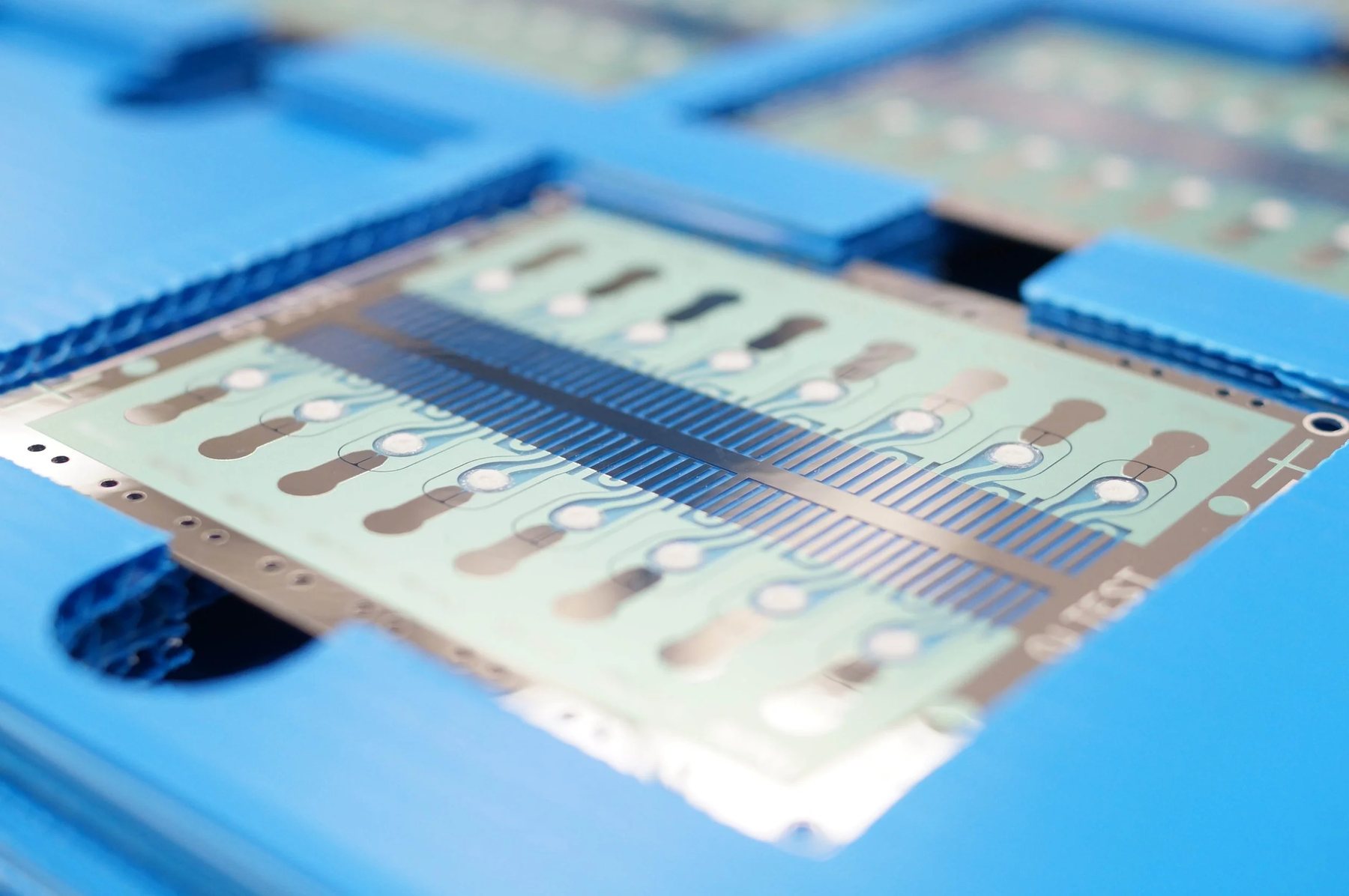
Laser micromachining produces features at the scale where mechanical tooling stops being an option. Microfluidic channels, biosensor electrodes, and precision apertures in thin films and foils.
How it works
Short and ultrashort pulses remove material in increments small enough to hold micron-scale geometry. Femtosecond pulses deposit so little heat that we measure the heat-affected zone rather than assume it. That is what makes them work on heat-sensitive substrates and thin metal foils.
Why pulse duration sets the edge — the guide and heat-confinement map →
Process envelope
| Minimum feature | 25 µmNIR, green, or UV sources on biochip laminates. |
|---|---|
| Pulse regimes | Nanosecond, picosecond, femtosecond |
| Wavelengths | 355 nm, 532 nm, 1064 nm, 9.4 / 10.2 / 10.6 µm |
| Relative throughput | Multi-feature panels without part repositioning; rate established per panel in the trial |
At this scale the process window narrows until small parameter changes produce visibly different parts. So micromachining work starts in the lab, on your actual material. What comes back is a parameter set, not an opinion.
In production