

Ablating
RFID antennas, ablated roll-to-roll
Laser ablation removes aluminum from a paper liner to form the antenna — roll-to-roll, with no chemical etching.
Equipment
Industry
LasX processes electronics materials — flexible circuit substrates, printed electronics, RFID antennas, RFI shielding, and precision apertures — as equipment and as contract work.
Applications
Laser ablation removes aluminum from a paper liner to form the antenna — roll-to-roll, with no chemical etching.
Each sheet is registered to the print by camera and cut without a die, and a vacuum pick head lifts the finished parts off the carrier.
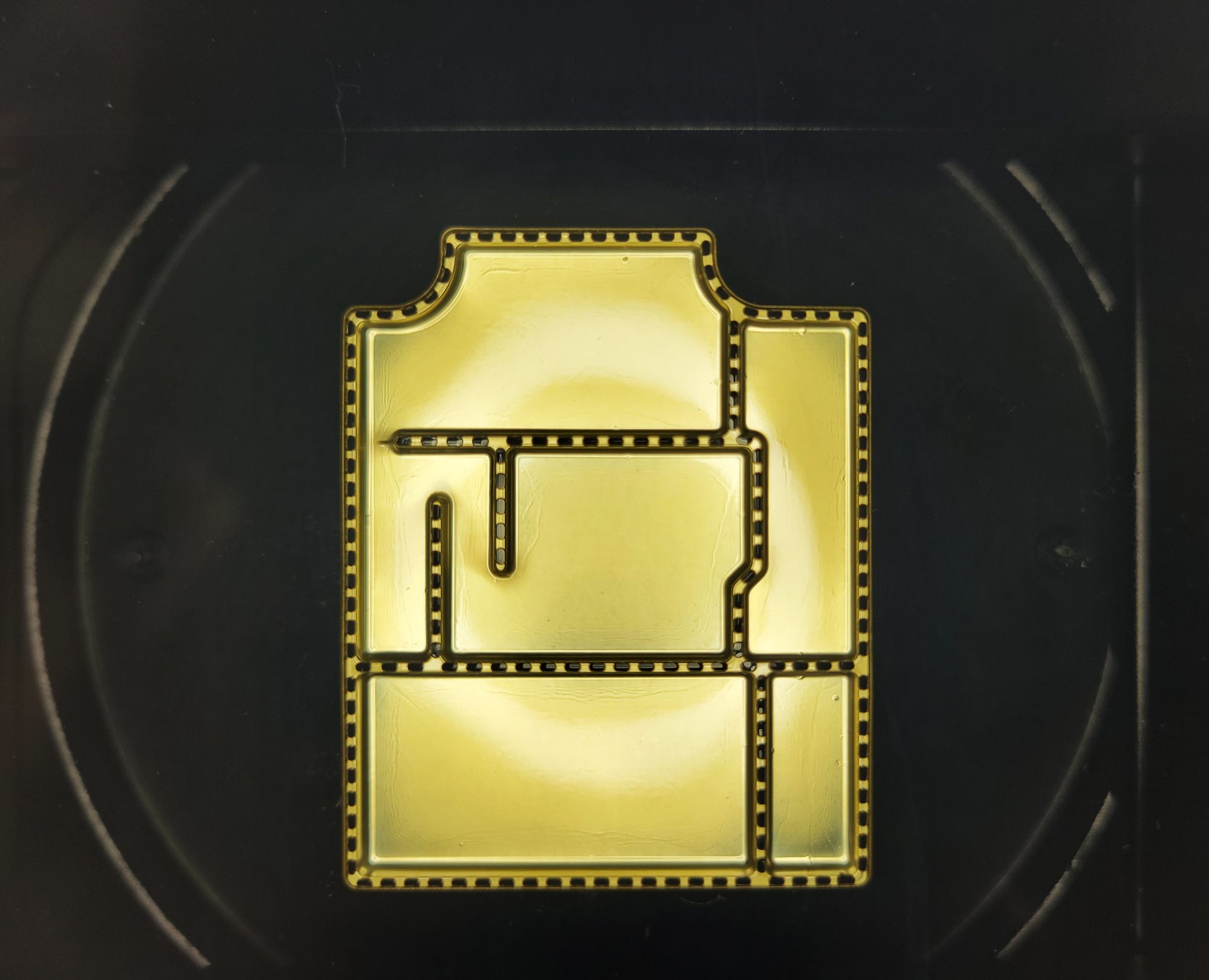
Shielding materials cut to precision apertures and outlines, with aperture geometry held digitally across the panel.
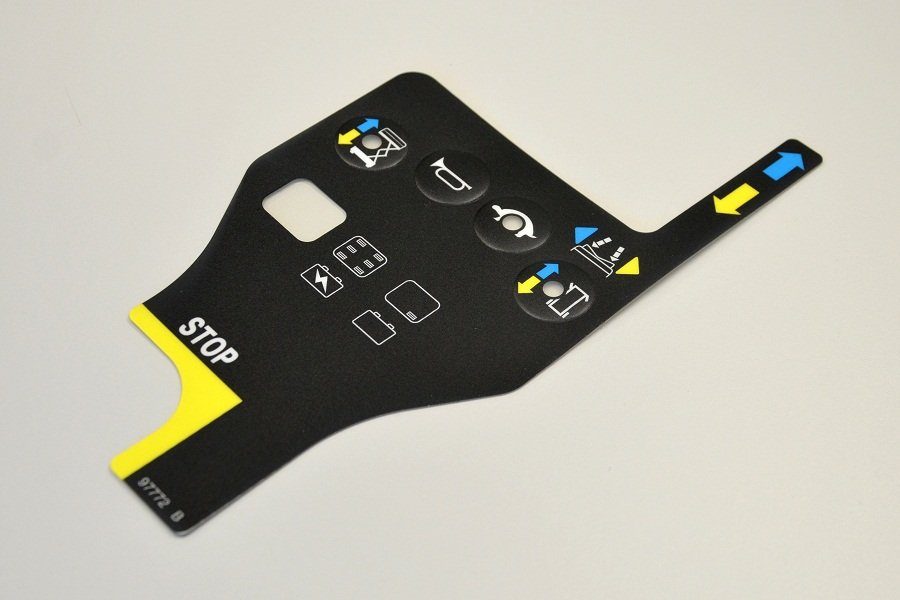

Flex circuits cut to outline, registered to existing features with distortion compensation.
ExactPro pairs dual-linear-motor precision with NIR and UV sources for aperture and circuit work where edge geometry decides yield. SheetPro takes the same work to boards and sheets larger than 670 × 670 mm.
Contract cutting of shielding materials, flexible substrates, and precision film components, including RFI shielding.
Flexible-electronics work rewards the same thing diagnostics work does: geometry you can repeat without a tool that wears.
Wall geometry. The aperture's wall angle and smoothness follow beam quality and parameters. It is measurable, and we measure it.
Trials in the PhotonX lab come back as processed samples and a written report — not a proposal.