
Capability
Laser Drilling
Laser drilling produces holes by percussion or trepanning, from tens of microns upward. Optics and pulse parameters set diameter and taper, not a bit. It suits vents in device housings, vias in flexible circuits, filters, and metered-flow features in medical disposables.
How it works
Percussion drilling stacks pulses at one point until breakthrough. Trepanning traces the hole outline with a focused spot, for larger or tighter-tolerance holes. The material and the heat-affected zone the application tolerates decide the source, NIR or UV. They also decide the pulse duration, nanosecond through femtosecond. The two choices are independent.
Why pulse duration sets the edge — the guide and heat-confinement map →
Process envelope
| Hole diameter | From ~20 µmMaterial- and thickness-dependent; trial data required. |
|---|---|
| Method | Percussion or trepanning |
| Sources | NIR, UV; nanosecond to femtosecond |
| Heat-affected zone | Minimal with ultrashort pulses |
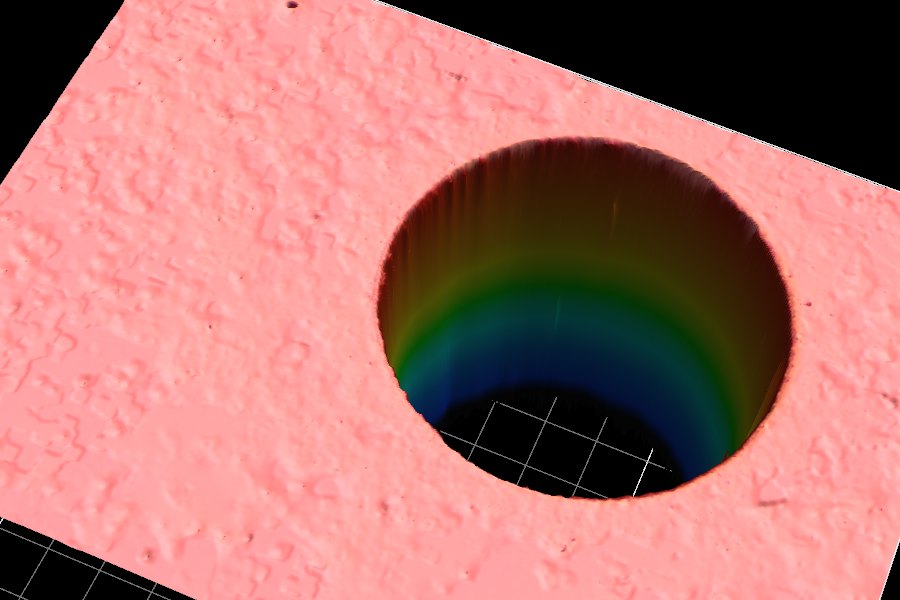
Drilling is where burr matters most. A mechanical hole in thin metal carries a burr on the exit side, and in a fastener, a filter, or a fluidic channel that burr is a defect. A laser hole carries no mechanical exit burr. We measure exit-edge condition, taper, and recast on your holes and report them.
From the lab