

Kiss-cutting
Kiss-cut pipe markers
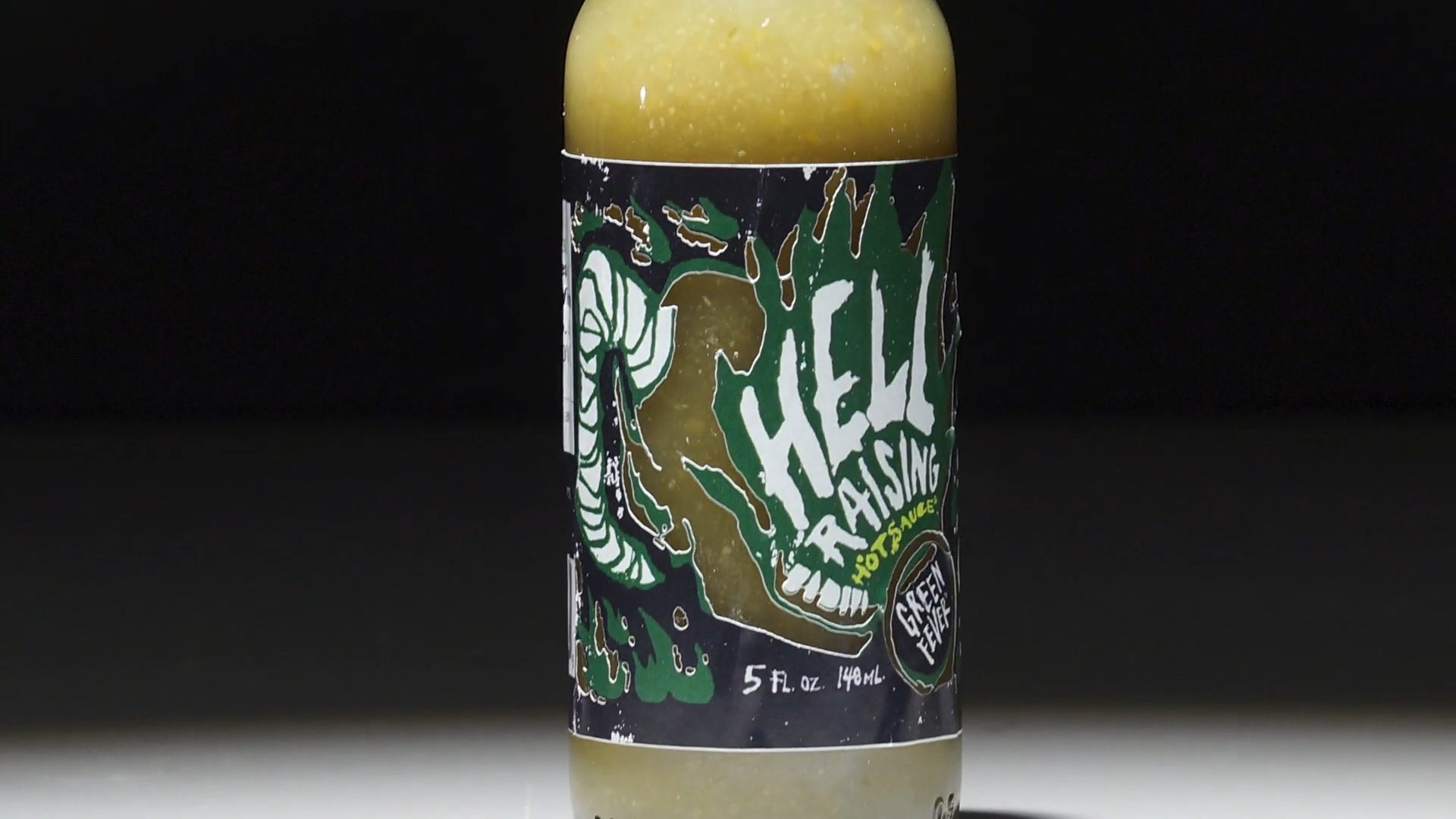
Each marker's outline is cut through the face stock while the liner stays intact. The next legend and size come from the file — no die.
Equipment
Industry
Kiss-cut, die-cut, perforate and mark pressure-sensitive label stock from the file — no tooling, no blade-to-anvil gap to drift, and a changeover that is a recipe load, not a die swap.
Applications
Each marker's outline is cut through the face stock while the liner stays intact. The next legend and size come from the file — no die.
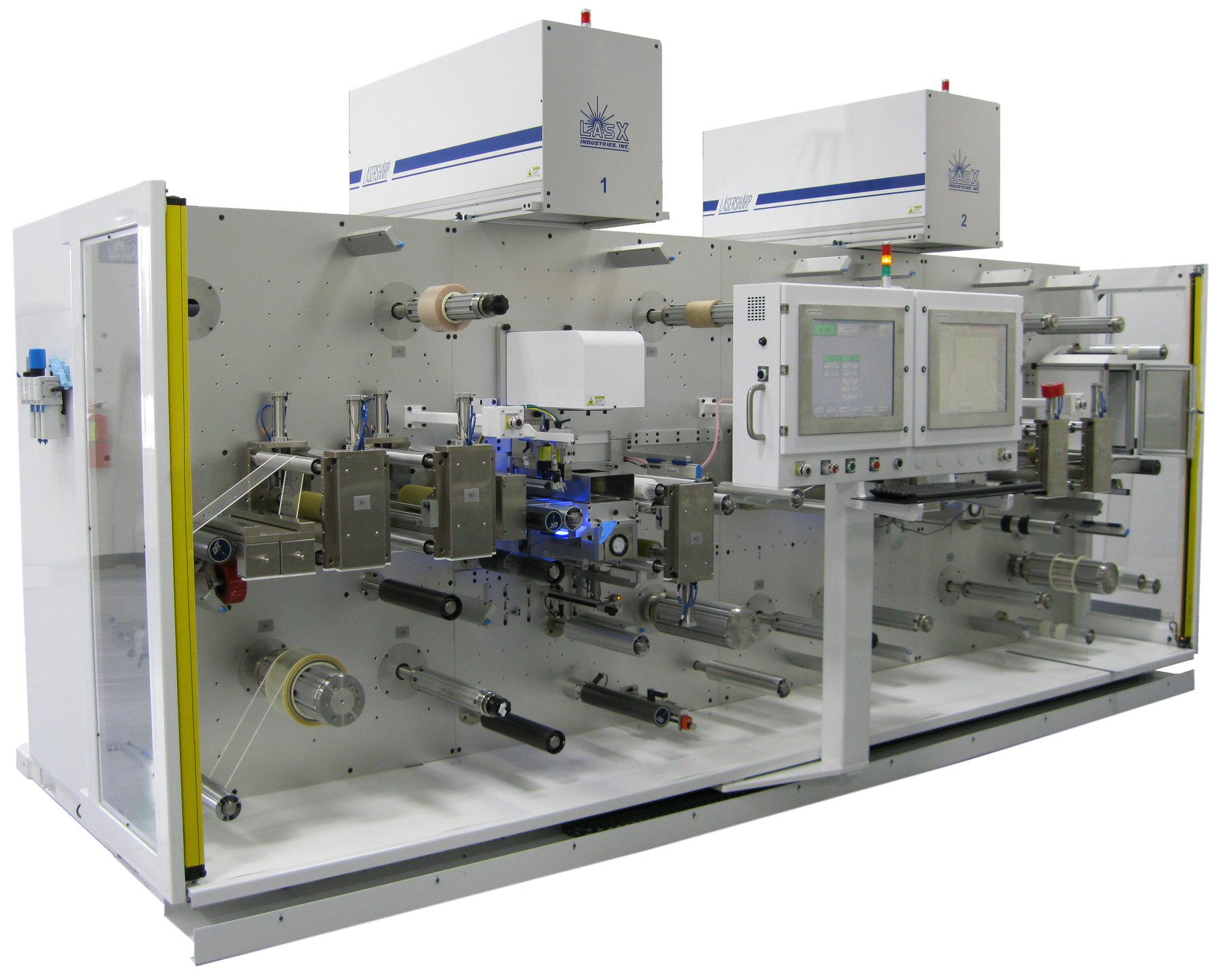
A LaserSharp® Module on a narrow-web finishing line switches from one sticker design to the next on the running web — no die change, no line stop.
Short runs, versioned shapes and variable data cost a recipe, not a die.
Codes marked on the line that cuts the labels, without a second machine.
Kiss-cutting on a rotary die depends on the gap between blade and anvil, which drifts as the blade wears. On a laser it depends on the energy delivered per unit length — the same recipe value on the last roll as on the first.
A die presses through face stock and adhesive; on thin films and multi-layer PSA constructions that pressure moves the material and squeezes adhesive out of the cut. A laser removes material without contact, so edge geometry depends on absorption and focus, not press setting.
Short runs, versioned shapes and variable data cost a recipe, not a die. Marking on the same line adds UDI, lot and 2D codes without a second machine.
MicroLam™ is a stand-alone narrow-web laser finishing platform — 100 mm or 350 mm web, spindles and nips configured to your unwind and rewind, one to three LaserSharp® Modules. The LaserSharp® Module is the processing module alone, integrated into an existing press or digital finishing line by LasX or the line OEM.
Contract laser converting of pressure-sensitive label stock on LasX narrow-web equipment — kiss-cut, die-cut, perforated, and marked from your file, prototype through production. No die to buy, no tooling lead time.
The lead process is kiss-cutting: cut the face stock and adhesive, stop at the liner, so labels stay on the carrier for handling and dispensing.
We do not laser-process vinyl (PVC) or fluoropolymer stocks. They release HCl and HF. Very long runs of one simple shape on paper stock may still be cheaper on a rotary die. We tell you which side your job falls on after a static-sample trial.
Submit label stock for a feasibility trial → · Have us make the labels → · Talk to a laser expert about MicroLam →
Often — it's the most common reason a die cutter sends us a job — small holes that lift off the liner, adhesives that load the die, inside cuts too intricate to strip. Minimum features run to 25 µm on laminates with NIR, green or UV sources and 50 µm in CO₂ production; on adhesives and foam, the trial sets the limit.
Trials in the PhotonX lab come back as processed samples and a written report — not a proposal.