

Etching
Denim finishing
Programmable laser patterns replace manual sanding and chemical finishing.
Equipment
Industry
LasX builds wide-web laser processing systems for textiles — denim finishing, upholstery, furniture fabrics, and technical textiles — where the beam cuts and edge-seals synthetics in one operation.
Applications
Programmable laser patterns replace manual sanding and chemical finishing.
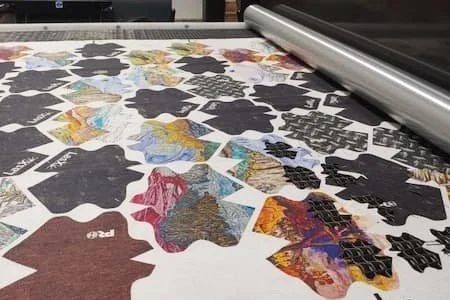
Nested parts cut in register to the print, with best-fit distortion correction for fabric that has stretched or skewed since printing. On suitable synthetics the beam seals the edge as it cuts — no fray, no overlock.
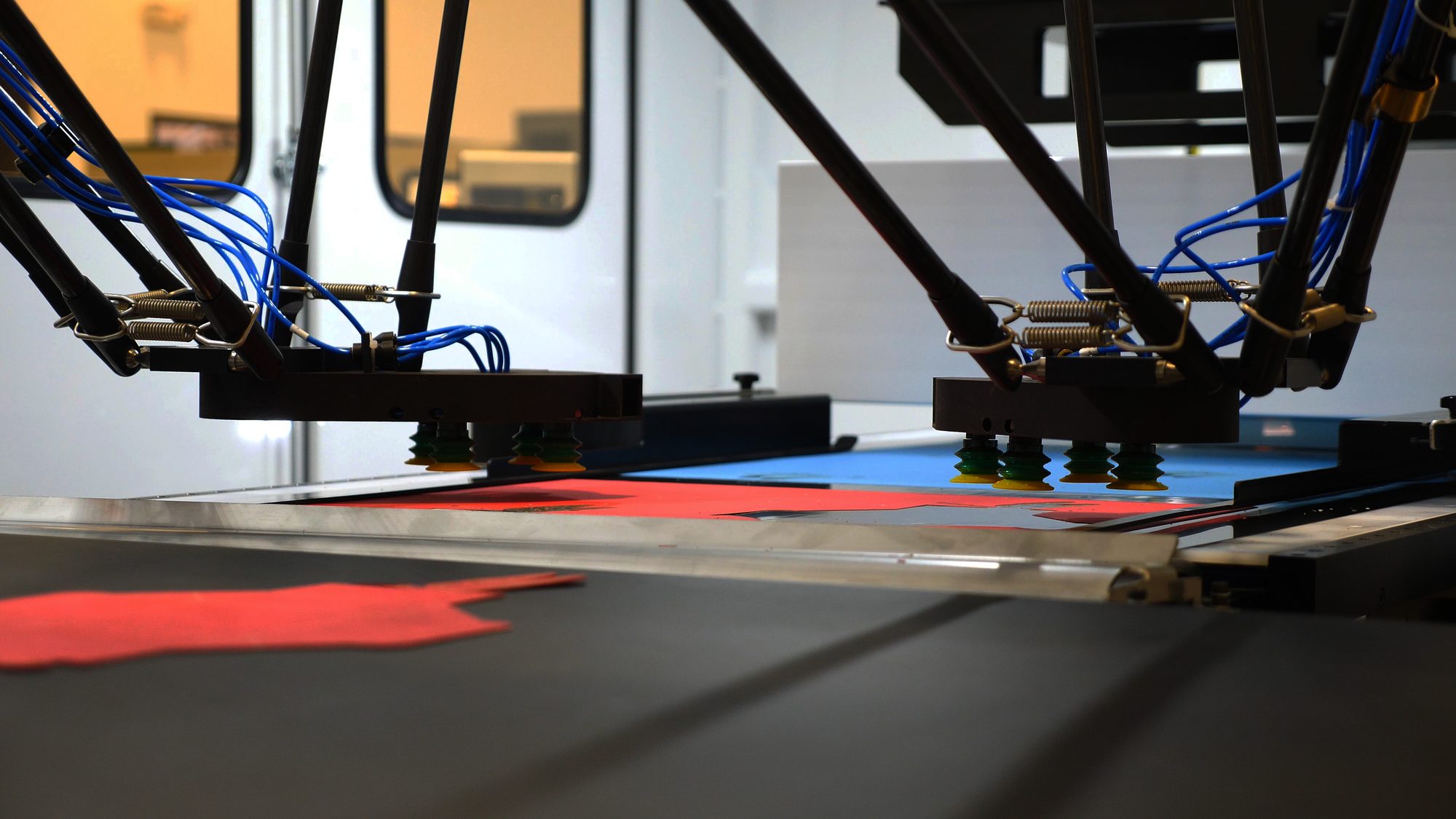
Automated pick-and-place of finished parts straight off the bed.
LaserSharp® Modules process webs to 2,000+ mm. They cut and edge-seal synthetic fabrics in one pass, in register to print or weave where the design demands it.
Contract cutting of technical and decorative textiles — development runs and production without dedicating a line.
The laser's oldest textile trick is still its best: on suitable synthetics, it seals the cut edge as it cuts. We verify edge strength and appearance on your fabric.
On synthetics, controlled melting is the point — it seals the edge against fraying as it cuts. We tune edge appearance per fabric. Naturals behave differently, and we evaluate those in the lab.
Trials in the PhotonX lab come back as processed samples and a written report — not a proposal.