

Cutting
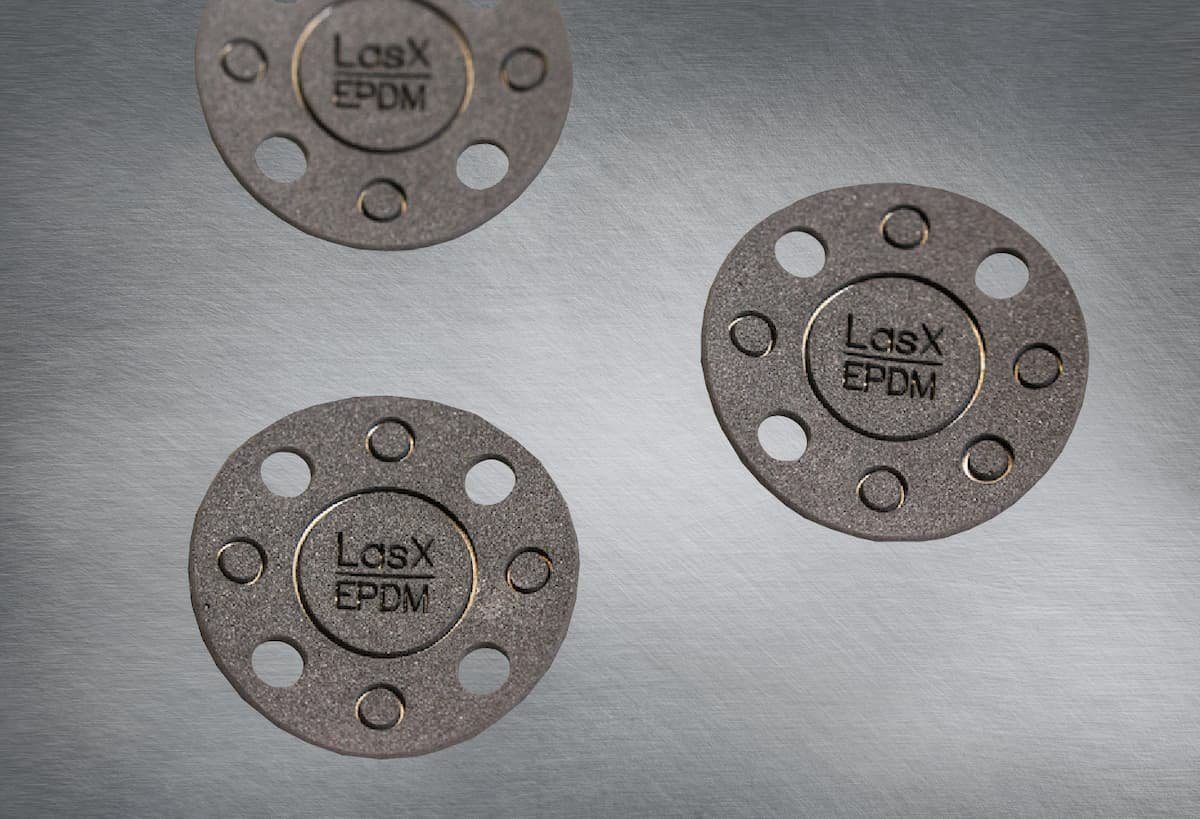
Rubber gaskets, cut and marked
EPDM gaskets, laser cut and marked. Compressible materials are cut without the crush distortion a die imposes.
Equipment
Industry
LasX builds laser cutting systems for gasket and adhesive converting, and runs contract laser processing for converters who need parts before they need a machine.
Applications
EPDM gaskets, laser cut and marked. Compressible materials are cut without the crush distortion a die imposes.
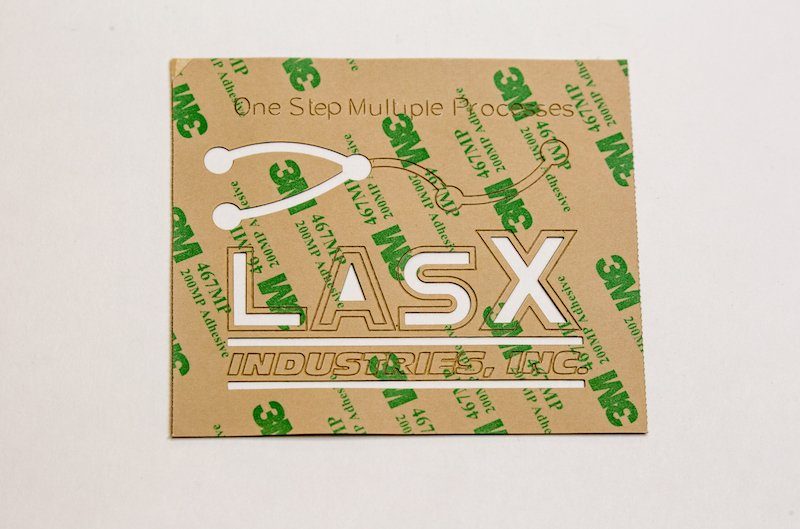
Adhesive cut to shape and left on its liner. Kiss-cut depth is controlled digitally.
No die touches the material. The waste skeleton strips off and rewinds, and the finished discs leave on the take-away conveyor.
LaserSharp® Modules cut compressible and adhesive-coated materials without the crush, tooling wear, and die-change downtime that mechanical cutting imposes.
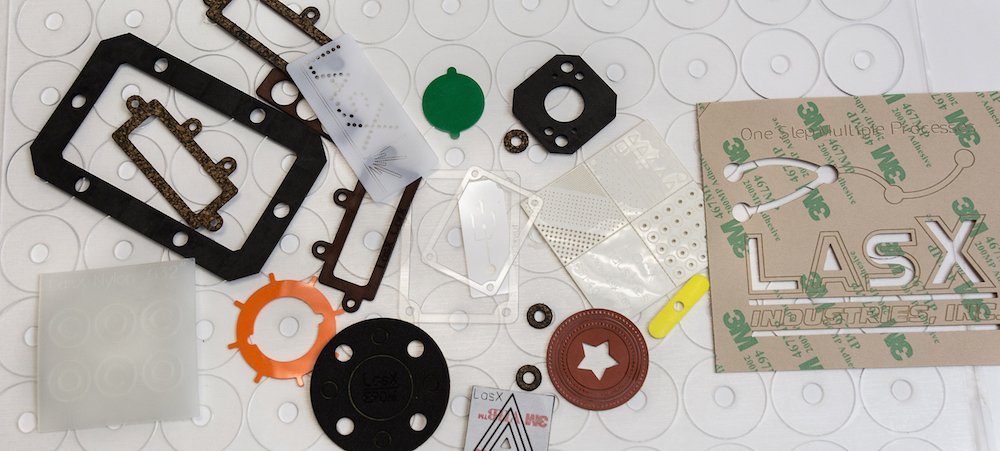
Contract laser cutting of gaskets, seals, and adhesive-backed parts — prototype through production.
Compressible materials are where mechanical cutting fights physics. A die has to squeeze the material to cut it, and squeezing changes the part.
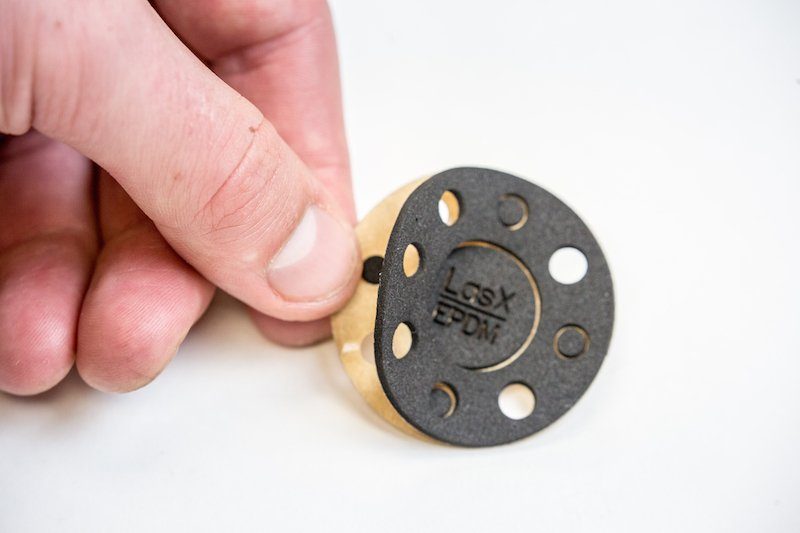
Depth is a function of power, speed, and the absorption difference between the adhesive stack and the liner. The laser holds that depth digitally, so it does not drift the way a rotary die does as the blade wears. We establish it per material construction.
Often — it's the most common reason a die cutter sends us a job — small holes that lift off the liner, adhesives that load the die, inside cuts too intricate to strip. Minimum features run to 25 µm on laminates with NIR, green or UV sources and 50 µm in CO₂ production; on adhesives and foam, the trial sets the limit.
Trials in the PhotonX lab come back as processed samples and a written report — not a proposal.